

CE marked · Clinically studied
See what's happening inside your breast in between doctor visits
From €369 or only €35/month with Klarna
Most women get a breast screening every 1 to 3 years.
Luminous allows you to monitor your breast health at home every month, in between those screenings.
- Clinically Studied A published, peer-reviewed study of 170 women
- CE Marked Conforms to EU medical-device standards
- Backed by Doctors Recommended by our medical advisory board
How to use
Using the Luminous Device at Home
Get to know your breast in just two minutes, once a month, in your own bathroom.
Dark room, mirror in front of you.
Turn the lights off and stand at a mirror. Darkness is what makes the glow readable — and the mirror lets you watch the light come through.
Device on, flat to the skin.
Turn it on and choose your intensity, then press it flat against the underside of your breast. The light brightens on contact and the tissue glows red.
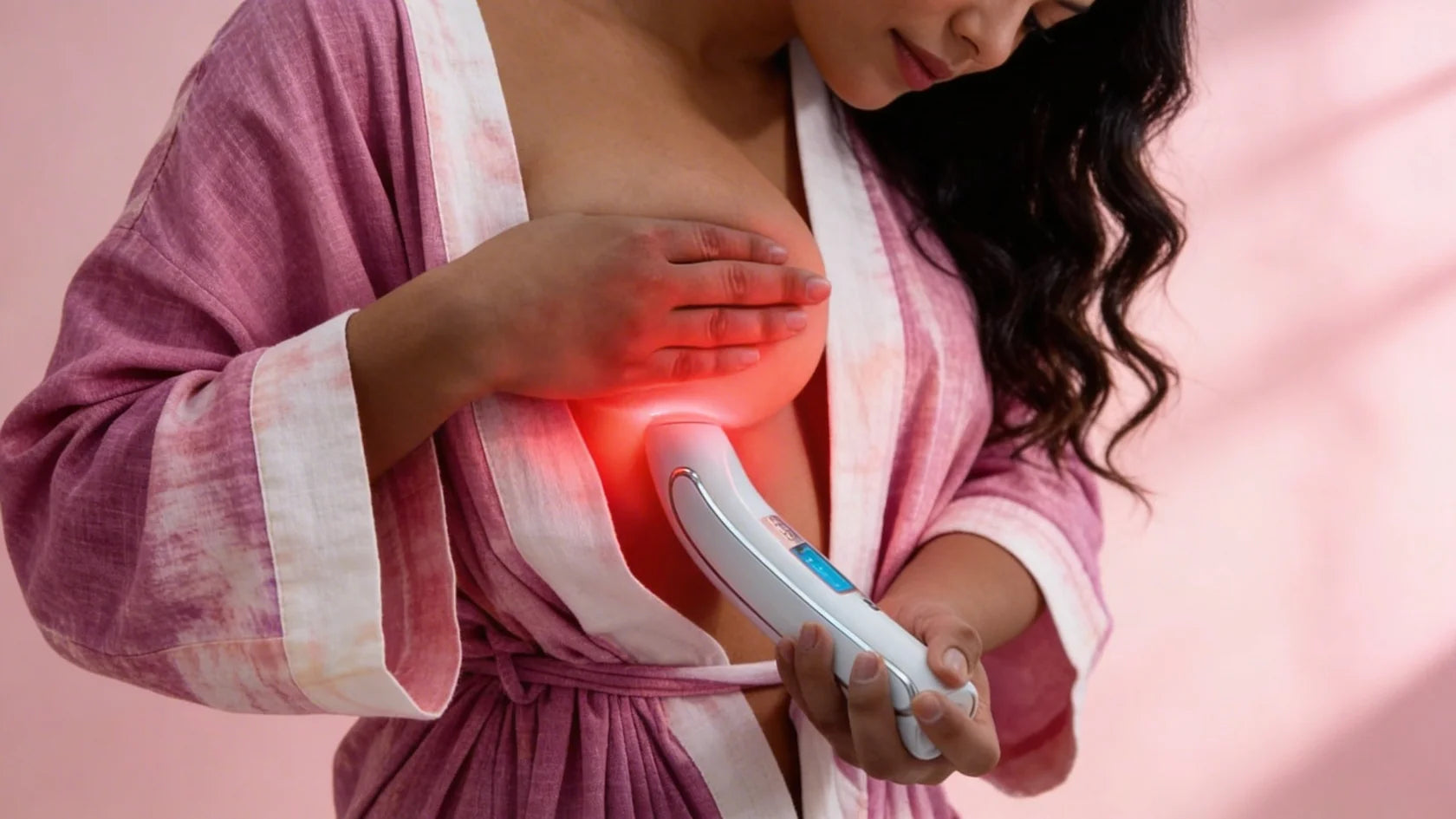
Right side first — and slow.
Always start on the same side, so month-to-month comparisons mean something. Move slowly around the full breast — up under the arm, high toward the shoulder. Slow is the whole technique.
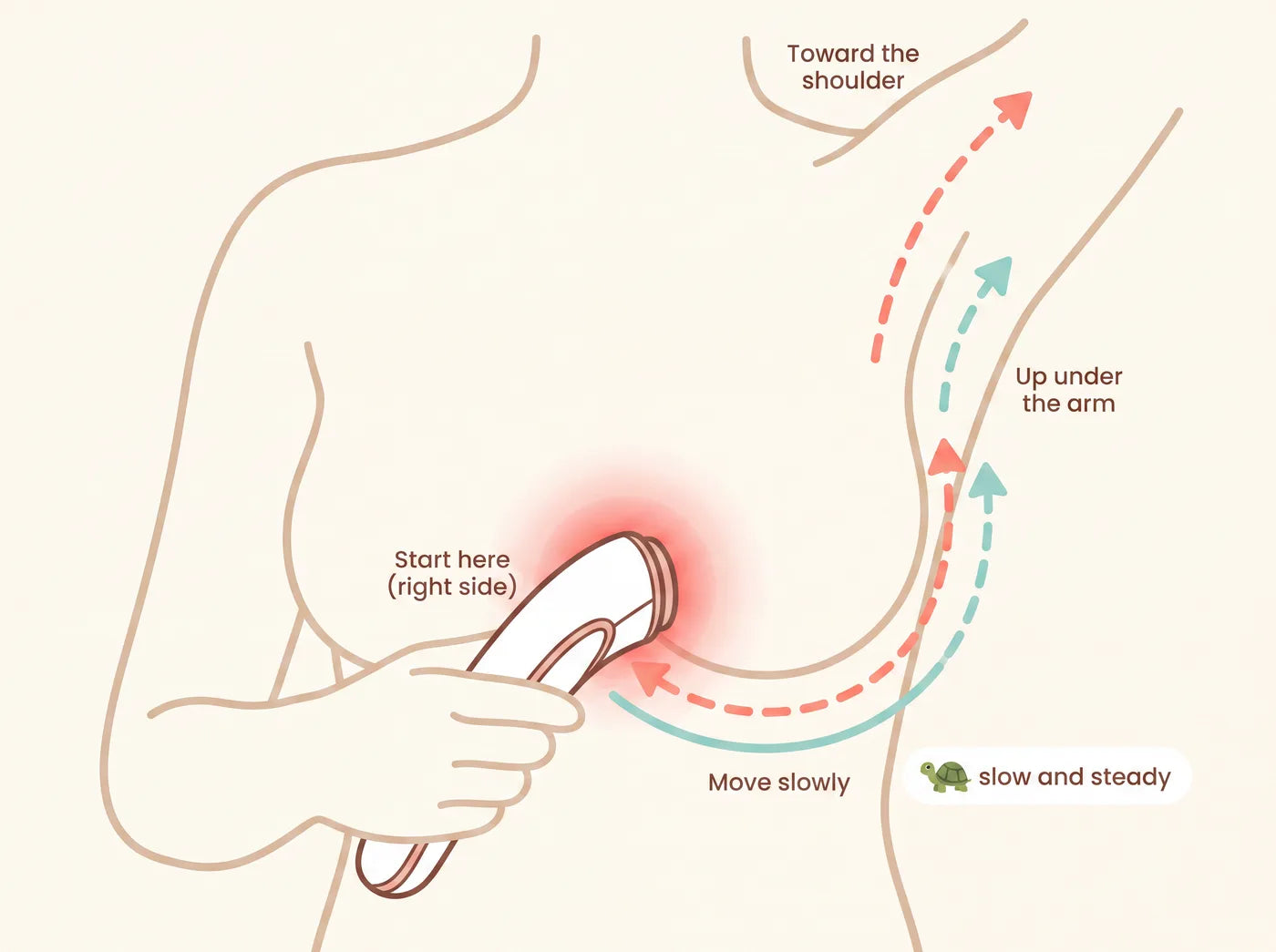
Then the left, the same way.
Repeat every part of the pass on your left breast, in the same order.
Note what stood out.
If anything caught your eye — a shadow, a new mark — write it down so you can raise it with your doctor later.
Your reference
Get to know your Normal.
Your breast is unique. That's why the most important thing is to get to know your breast — and to have a reference that lets you notice changes early.
The three images below show what to look for — a healthy baseline, plus two kinds of change worth mentioning to your doctor.
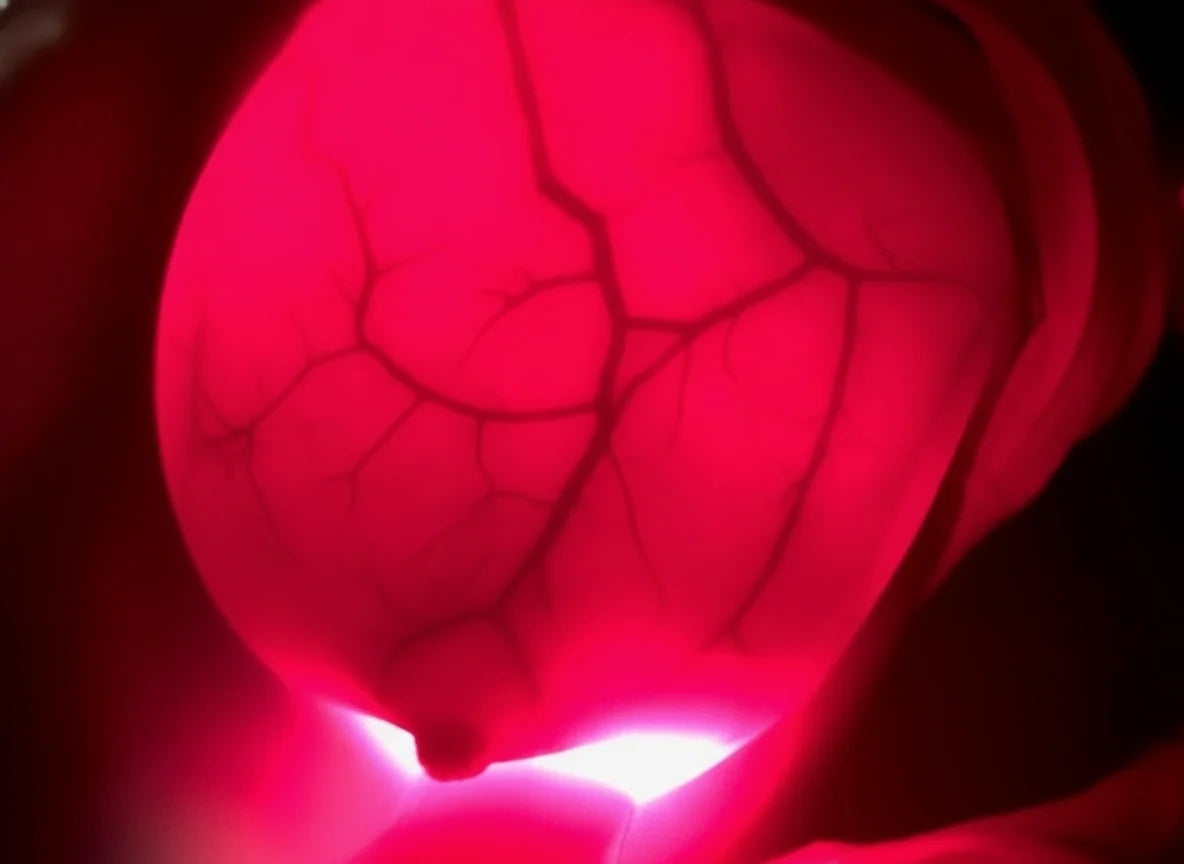

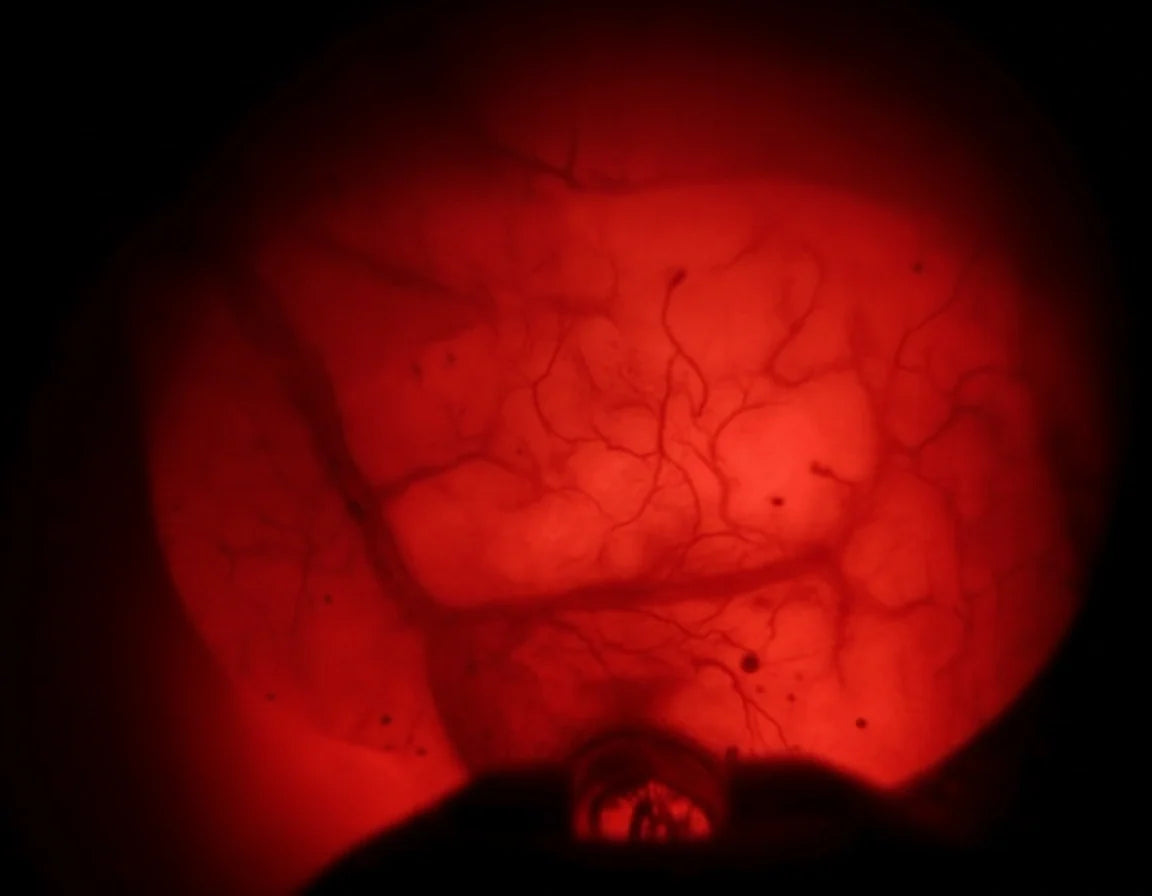
What to do if it looks different from your normal:
Noticed something that isn't your usual? Book time with your doctor and simply tell them what you saw. Try not to worry — most changes turn out to be nothing — but it's always worth checking. Luminous is here to help you notice those differences; your clinician is the one to look closer and tell you what they mean.
Studied in a clinical trial. Recommended by leading doctors.
The technology behind Luminous has been through a peer-reviewed, double-blind clinical study of 170 women — and its development is guided by a board of physicians and scientists across oncology, women's health, and medical regulation.
Medical & scientific advisory board

Dr. Howard Petty, PhD
Scientific Advisor · Precision Oncology
Co-founder of Predictoma Inc., developing an AI-powered test to predict cancer recurrence. Harvard PhD in Biophysics, postdoctoral at Stanford.

Dr. Dipanjan Pan, PhD
Scientific Advisor · Nanomedicine
Dorothy Foehr Huck Chair Professor in Nanomedicine at Penn State University. Associate Editor at Wiley Nanomedicine and CTO of Innsight Tech.

Dr. Amy Yee, PhD
Scientific Advisor · Oncology & Biotech
Founder of Cha Therapeutics and Professor at Tufts University. A leader in translational cancer research, bridging laboratory science to real-world clinical application.

Dr. Ira Lawrence, MD
Medical & Innovation Advisor · CMO
Former Chief Medical Officer at Alphaeon Corporation and Medisis. Expert in global medical product development, regulatory strategy, and FDA approval pathways.

Dr. Alaknanda Dhotre, MD MBA
Global Medical Affairs & Regulatory
Executive leadership at Biocon and Becton Dickinson. Deep regulatory expertise and international healthcare acumen driving Luminous' FDA submission strategy.

Dr. Diana Caragacianu, MD, FACS
Clinical Advisor · Breast Surgical Oncology
Board-certified breast surgical oncologist in Miami, FL. Dedicated to advancing breast health, early detection, and high-quality patient care.

Dr. Diego Illanes, MD, FACOG, FACS
Clinical Advisor · Urogynecology
Board-certified urogynecologic surgeon with 15+ years in female pelvic medicine, minimally invasive surgery, and pelvic floor reconstruction. New York, NY.

Dr. Rafael J. Perez, MD, FACOG
Clinical Advisor · OB-GYN & Women's Health
Harvard-educated, double board-certified OB-GYN and Urogynecologist. Residency at the Johns Hopkins-affiliated Greater Baltimore Medical Center.

Dr. John P. Diaz, MD
Clinical Advisor · Gynecologic Oncology
Chief of Gynecologic Oncology at Miami Cancer Institute. A nationally recognized leader in minimally invasive and robotic surgery for gynecologic cancers.
It has been through peer review.
The LED transillumination device this product is built on was evaluated in a study of 170 women, published in Frontiers in Medicine in February 2022 under a double-blinded protocol. It's open access — we'd rather you read it than take our summary of it.
Read the full paper →
Ocasio-Villa F, et al. Front Med. 2022;8:805182
What women in that study said about using it:
clearly saw their own breast tissue with the device (n=169)
reported no discomfort during the examination (n=169)
said they felt comfortable taking a screening test
In their own words
Real people. Real stories.
The women who reach for Luminous every month — telling you why, in their own words.
The Luminous Advocacy Project
One Sold. One Given.
For every Luminous we sell, we give one to a woman who has no tool of her own — and no easy way to get one.
Through our foundation, the Luminous Advocacy Project, our mission is to put a light into the hands of women around the world — giving those without the means or access the ability to get familiar with their own bodies.
Meet the founder
Marylin Dans
CEO & Founder
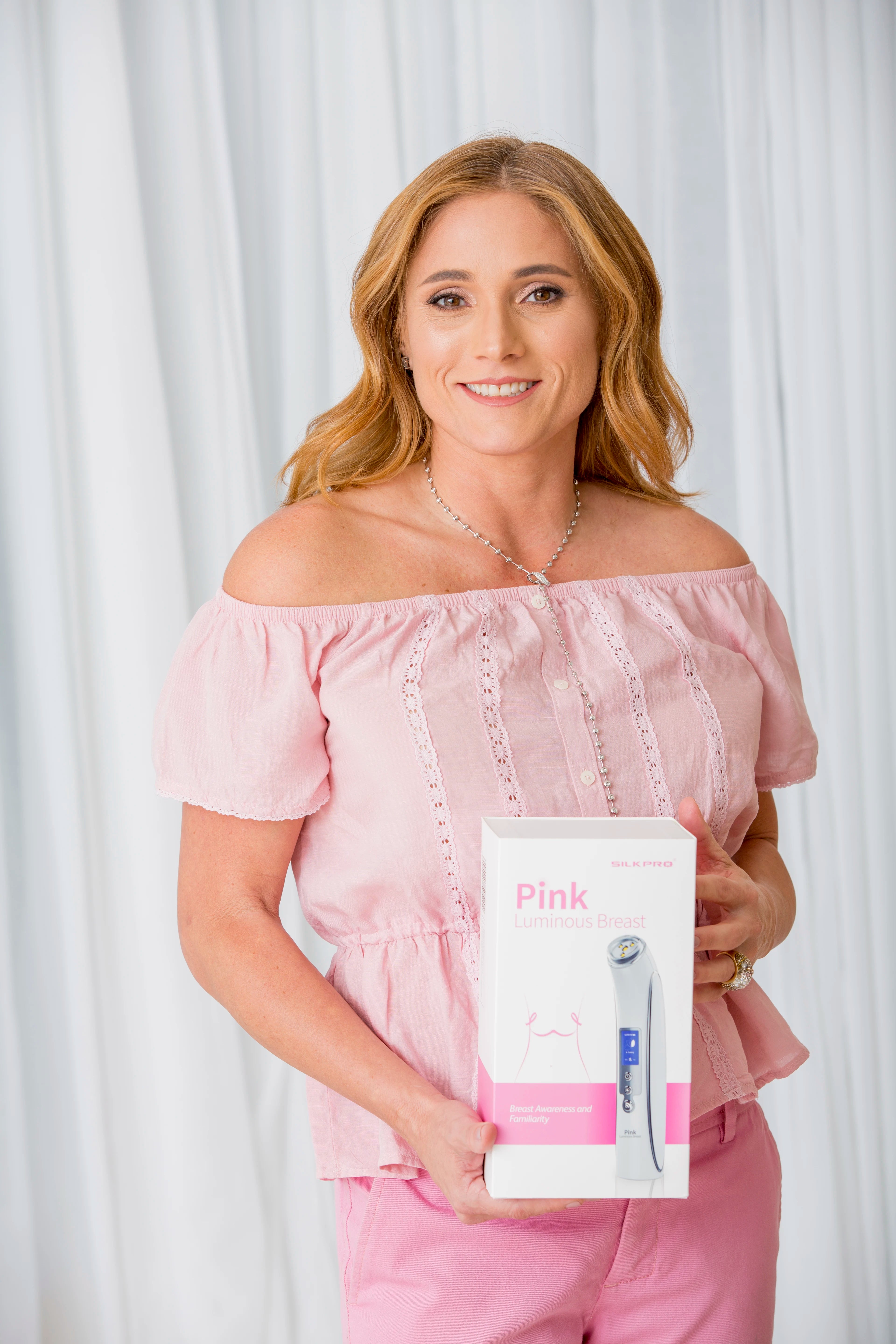
A personal story. A worldwide mission.
At 17, Marylin Dans felt a lump in her breast. It led to surgery. The lump was benign — but this experience never left her.
Thirty years later, as a mother of twin boys and a committed citizen, she used this experience to create something that could protect women who otherwise would never have access to the necessary resources.
The result is the Luminous Pro Series. Not just a device — but a way to live consciously.
The Luminous Pro Series
A light of your own.
Two minutes, once a month, in your own bathroom. No radiation, no compression — just you, getting familiar with your own normal. And for every one that goes home, another is placed in the hands of a woman who has none.
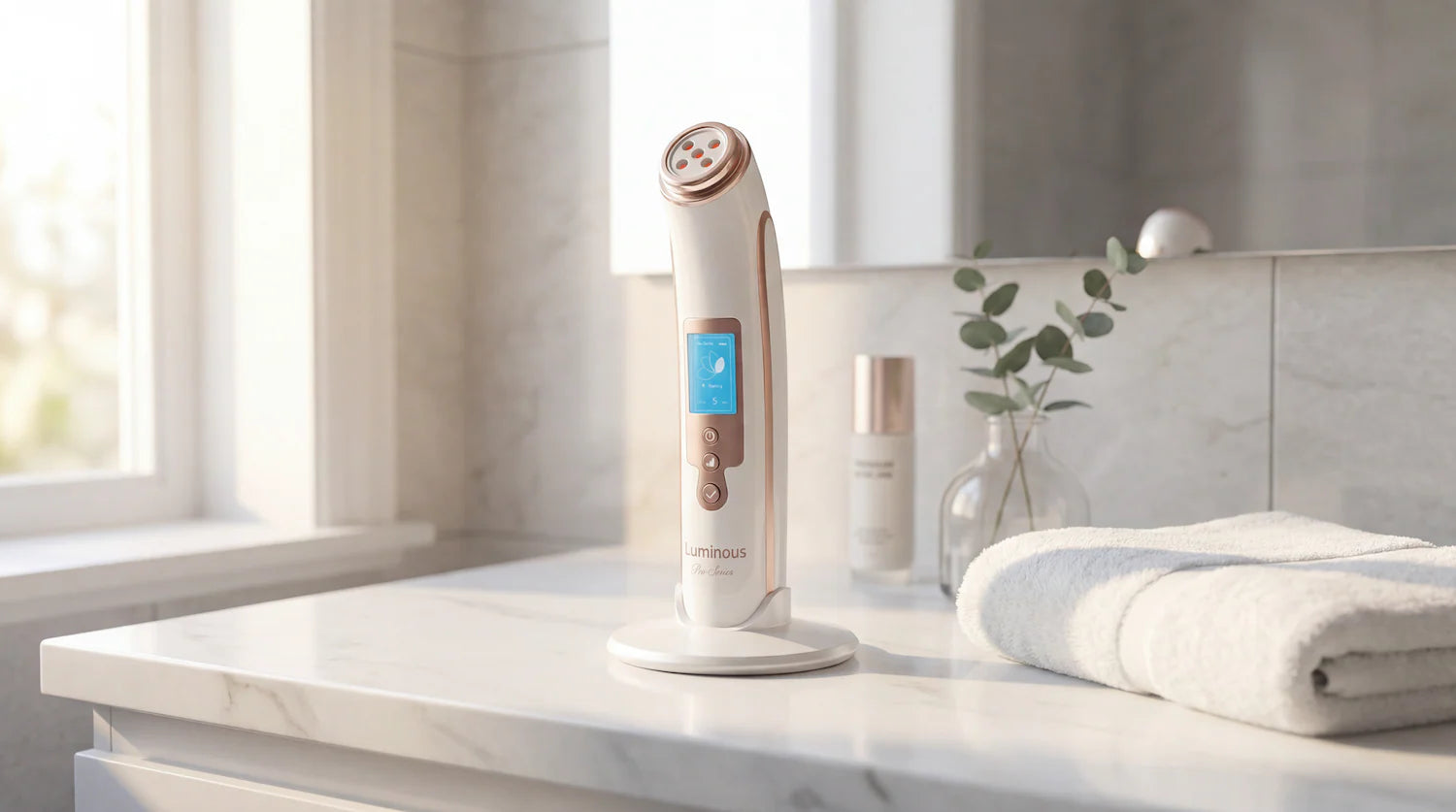
From €369 — or €35/month with Klarna
Questions, answered plainly.
Does this find cancer?
No. UR Luminous shows you light and shadow in your breast tissue. It cannot identify, diagnose, or rule out cancer or any other condition. Its purpose is to help you become familiar with your own normal, so that you're better placed to notice a change and raise it with your doctor.
Can I use this instead of a mammogram?
No, and we'd ask you not to try. Mammography remains the standard for breast cancer screening. If your national programme invites you, go.
Does it hurt?
No. There's no compression and no radiation. The head may feel slightly cool when you first touch it to your skin. In the published study, every participant who completed the survey reported no discomfort.
How long does it take?
Under two minutes once you've done it a few times.
How often should I use it?
Once a month. More often isn't better, and can make it harder to tell what's actually changed.
What if I see something?
Contact your doctor. Don't diagnose it yourself, don't ask the internet, and don't wait for it to resolve. Most breast changes are not cancer — but that's a determination for a clinician.
What if I don't see anything?
That's the usual outcome, and it's not a guarantee of anything. Keep your screening appointments regardless.
Can I use it while pregnant or breastfeeding?
It is not suitable for use while breastfeeding. If you're pregnant, speak to your doctor first.